The Austin Native Plant Calendar: What to Plant, When, and Where
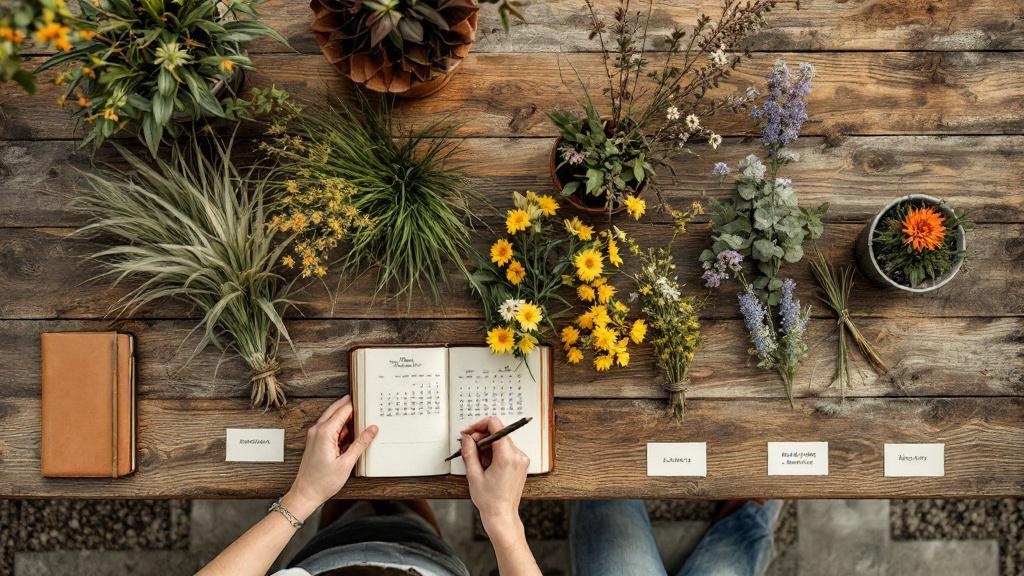
Most planting calendars are written for somewhere else. They tell Austin homeowners to put tomatoes in the ground in March and tulip bulbs in October, neither of which makes a lot of sense at our latitude. This is a calendar for here — what to plant, when, and where, based on what actually thrives in Central Texas dirt and Central Texas weather.
Austin sits at the seam between two ecoregions: the Edwards Plateau to the west, where limestone soils are thin and alkaline, and the Blackland Prairie to the east, where heavy clay holds water and cracks open in summer. Most yards have a little of both, and a strict planting calendar from a generic source ignores that completely. The native plants on this list have already adapted to the seam. They don’t need coddling. They need to be in the ground at the right time.
The rule that beats every other rule: plant in fall.
If you take one thing from this guide, take this: fall is when Austin yards get planted. Roots establish in cool, wet soil. By the time the heat returns in May, the plant has six months of root growth under it. Plant in spring, and you’re asking a seedling to survive a Central Texas summer on a three-month root system. Most won’t.
This is true for trees, shrubs, perennials, and meadow grasses. It’s why every project we install runs October through February if we can help it.
October — the start of the planting season.
Average highs drop into the mid-80s, the first cool fronts move through, and soils are usually still warm enough for root activity but cool enough to hold moisture. This is the single best month to put woody plants in the ground.
Plant now: Live oak, cedar elm, Mexican plum, Texas redbud, Anacacho orchid tree, mountain laurel, possumhaw, yaupon holly. Shrubs: Texas sage, autumn sage, agarita, Texas mountain laurel, evergreen sumac. Sow native wildflower seed — bluebonnet, Indian blanket, Mexican hat, lemon mint — by mid-October at the latest. Birds eat what you sow if you delay, but if you bury seed 1/8 inch with light soil contact and water once, you’ll see germination within three weeks.
Fall is when Austin yards get planted. Spring is when they bloom. Most homeowners do this backwards.
November — still the planting season.
Cooler nights, occasional frosts on the western edge of the metro. Native perennials go in this month: gulf muhly, Mexican feather grass, big muhly, Lindheimer’s muhly, blackfoot daisy, four-nerve daisy, salvia greggii (autumn sage), Salvia farinacea (mealy blue sage), and damianita. They’ll look unimpressive through winter and explode in spring. That’s the deal.
Garlic, onions, and leafy greens go in the vegetable beds if you’re growing food. Compost goes on every bed you plan to plant in spring — the worms work it in over the winter.
December and January — the trees.
Soil temperatures drop low enough that root growth slows, but planting is still fine, especially for bare-root or balled-and-burlapped specimens. We do most of our large-tree installs in these months because the trees are dormant, lighter, and easier to transplant successfully.
If you’ve got a heritage tree to add — a live oak, a cedar elm, a Mexican white oak — December and January are the right months. The Hill Country aquifer rains usually come in this window, which means free water for new transplants.
February — the last solid planting window.
By Valentine’s Day, the wildflowers you sowed in October are forming basal rosettes. This is the month to thin them where they’re crowded, and the last good month to plant evergreen shrubs that need time to root before summer.
If you’re putting in a native garden, late February into mid-March is also the right window for ornamental grasses you bought at a fall plant sale and held in pots over winter.
March — spring blooming begins, but stop planting.
This is the month people drive past nurseries on the weekend and feel the urge to fill the truck. Resist. By the time mid-March arrives, the soil is warming fast, the rains are slowing, and anything you put in the ground now has eight weeks to root before 95-degree heat hits. Most won’t make it.
What you should do in March: weed, mulch, prune (if you didn’t in February), and watch the bluebonnets bloom. Bluebonnets only set seed if you let them. If you mow the meadow before mid-May, you’ll lose them next year.
April and May — let everything come up. Just water.
This is when an established native garden looks like a magazine spread, and a brand-new one looks anemic. The difference is the fall planting you didn’t do. Once you commit to the calendar, year three is when your yard catches up to your neighbor’s professionally installed one. Year five is when it surpasses it.
Through April and May, the only work is supplemental water on the first-year transplants. Established natives need nothing. Bluebonnets, Indian blankets, gaura, mealy blue sage, salvia greggii, and four-nerve daisy will be in heavy bloom through May.
June through September — the hard months.
Don’t plant anything in these months unless you accept a 50% mortality rate and are willing to water daily for the first month. The native plants in the ground from your fall planting will look stressed but won’t die. Don’t fertilize. Don’t prune. Don’t overthink it. Water deeply once a week, early morning, at the drip line of woody plants. That’s it.
Late summer is when our Austin Yard Guide earns its keep — it covers watering technique, mulching depth, and which plants need supplemental water vs. which actually prefer drought.
What about the lawn?
Most planting calendars dedicate half their space to lawn care. We don’t, because we don’t think you should have a traditional lawn in Austin. The amount of water, fertilizer, and mowing it takes to keep a fescue or St. Augustine lawn alive between June and September is wildly out of proportion to its value. If you want a green ground plane that handles heat, look at horseherb, frogfruit, silver ponyfoot, or buffalograss — all of which thrive on what Austin gives them naturally.
We’ve written a longer piece on this, but the short version is: a native groundcover replaces a lawn at one-tenth the water cost and looks better in year three than the lawn did the day it was installed. Anywhere a lawn gets used (kids, dogs, croquet), keep a small turf zone of buffalograss. Everywhere else, plant something that belongs here.
A short list to start with.
If you’re not sure where to begin, here are twelve native plants that work in 90% of Austin yards, ordered by what you should plant first:
- Live oak — the canopy of any Austin landscape, plant where you want shade in twenty years
- Cedar elm — faster than live oak, beautiful fall color, handles wet feet better
- Texas sage — silver foliage, purple blooms after every rain, takes drought and reflected heat
- Mexican feather grass — backlit golden grass that drifts into every Hill Country garden
- Gulf muhly — explosive pink fall bloom, three-foot mound, no maintenance
- Blackfoot daisy — low white-flowering perennial, blooms eight months a year
- Salvia greggii (autumn sage) — pollinator magnet, blooms three seasons
- Mexican mountain laurel — evergreen, fragrant purple flowers in spring, foundational shrub
- Bluebonnet — start in October, never look back
- Four-nerve daisy — tiny yellow bloomer that flowers year-round at the base of grasses
- Agave americana — sculptural anchor, install with proper drainage so it doesn’t rot
- Inland sea oats — the only ornamental grass that thrives in dry shade, fills out under oaks
Plant them in fall. Water them through the first summer. After year two, walk away.
Want a native garden designed for your specific yard?
Every Austin lot is different. We design native gardens that work with the soil, drainage, and exposure you actually have — not what the plant tag at the nursery assumes.
Request a site visit