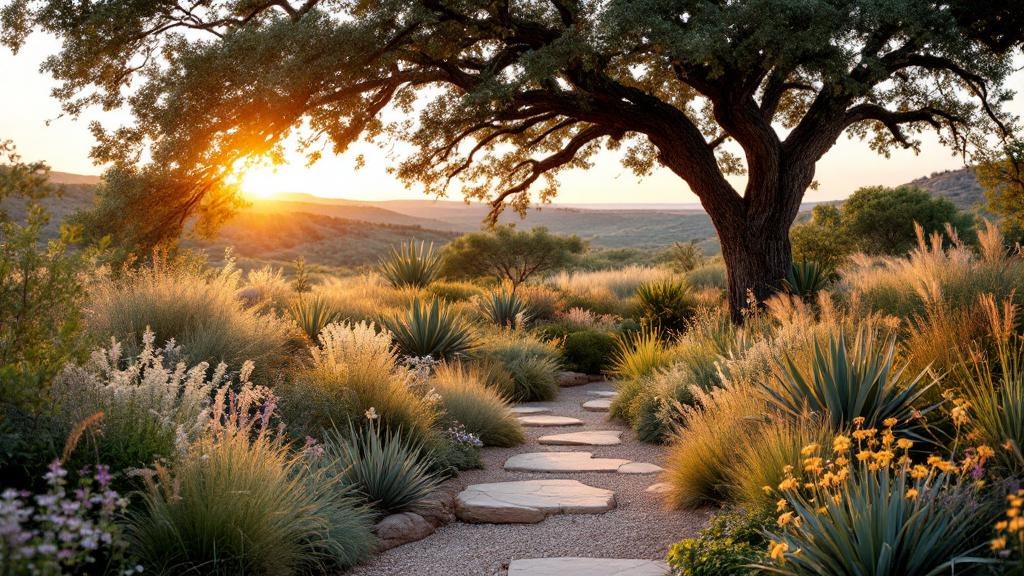
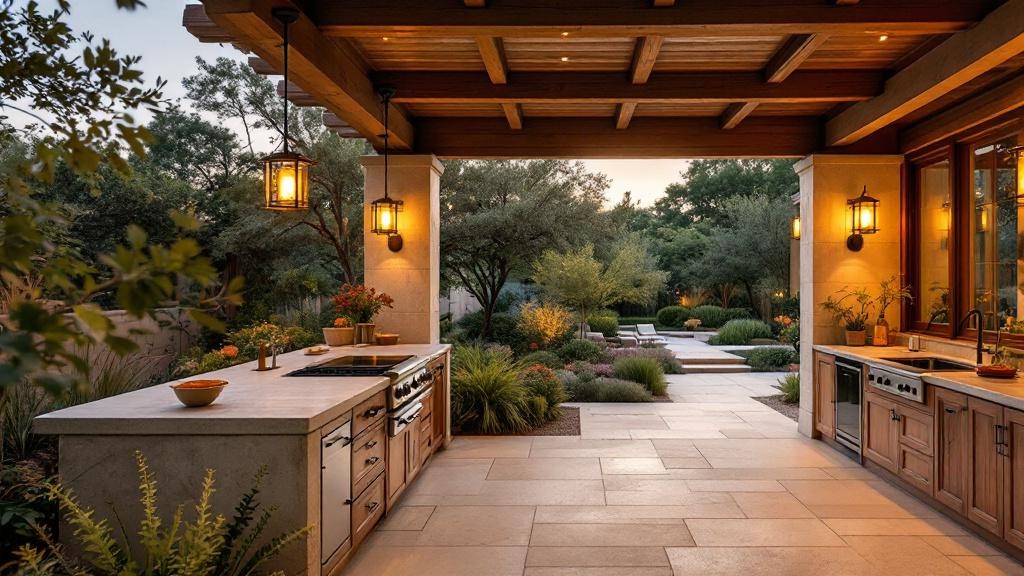
Landscape lighting designed for blue hour.
Warm path lights along DG paths. Uplit live oaks. Stone-integrated step lights. Brass and bronze hardware that ages instead of fails. Lit like a designer’s interior, not a Christmas display.
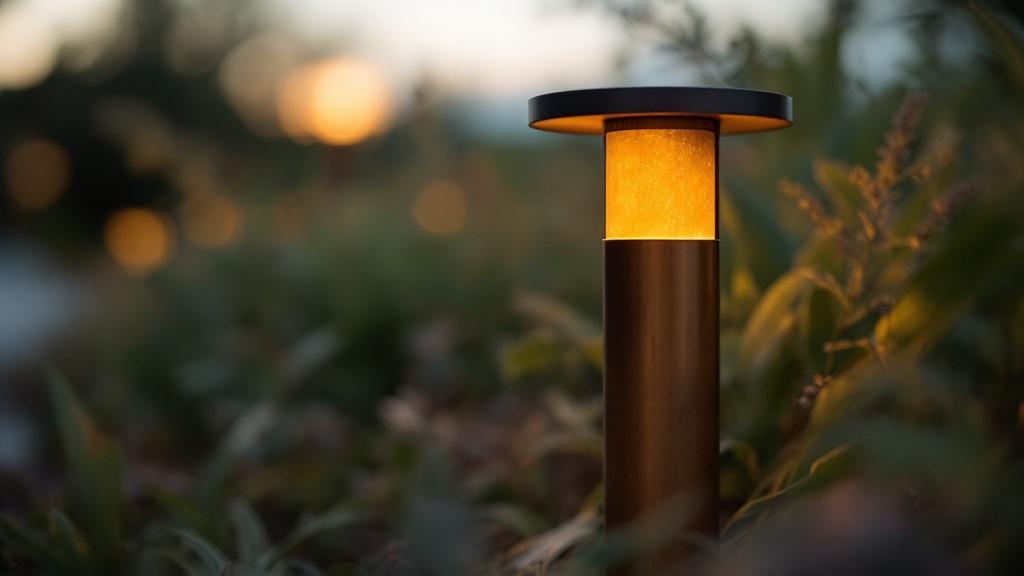
Solid brass and bronze.
Forged brass fixtures from FX Luminaire and Kichler Premier. Solid metal develops a patina; aluminum never does. The same fixture sits on the property for twenty years.
Most landscape lighting fails – visually and physically.
Big-box fixtures fade in two years. The light is too cool, too bright, too even. The yard looks like a parking lot at night instead of a garden.
Wrong color temperature
3000K and 4000K fixtures (cool white) make plants look gray and stone look dead. We spec 2700K or warmer – golden, like firelight.
Cheap fixtures fail fast
Aluminum stake-mount fixtures from big-box rust within three years. We use solid brass or bronze – Kichler Premier, FX Luminaire, Unique Lighting Systems. The hardware lasts 20+ years.
No layered design
Most installs run one circuit of path lights and call it a day. Real landscape lighting layers – path, accent, architectural wash, water feature, step. Each layer dimmable, zoned, controllable.
Six layers of landscape lighting.
We design lighting plans the way an interior designer plans a room – with layers, zones, and dimming.

Path lighting
Low warm fixtures along walkways. Hooded for glare control. Bronze or brass, 2700K LED.
Tree uplighting
Wash live oaks, cedar elms, native trees from below. Warm light makes the canopy glow.
Stone-integrated step lights
Recessed into limestone retaining walls and steps. Invisible by day, beautiful at night.
Water feature lighting
Submersible LEDs in pools, fountains, runnels. Warm tone, dimmable.
Architectural wash
Grazing light up a stone wall, a cedar pergola post, a stucco façade. Texture-revealing.
Patio + hardscape accent
Soft accent on patio surfaces, pergola structure, fire pit surround. Sets the scene.
Warm. Layered. Brass and bronze.
Warm light only
2700K or warmer, period. Most plants, stone, and skin look right at this temperature. Cooler light makes any garden look like a gas station.
Layered like an interior
Path layer, accent layer, architectural wash, water feature, step. Each zoned, each dimmable, each serving a purpose. Not one circuit of stake-mount fixtures.
Brass and bronze hardware
Solid metal fixtures from quality manufacturers. They develop a patina, they last 20+ years. No aluminum, no plastic, no big-box stake mounts.
What working with us looks like.
Site visit
We walk the property, talk through use, check drainage and sun, and leave with a fixed-fee design proposal – usually within a week.
Master plan
2D plan view, material palette, native plant list, phased budget. You see it before we touch a shovel. Design fee credits 100% toward the build.
Build
Our crew, not subs. We handle hardscape, planting, irrigation, lighting end-to-end. Most projects finish in 4–10 weeks.
Year-one care
Walk-throughs at 30 days, 6 months, and 12 months. Anything that doesn’t establish, we replace. 5-year warranty on hardscape.
Tell us about your project.
Most projects start with a site visit. Bring photos, Pinterest boards, or just a vague feeling. We’ll take it from there.
Often built alongside this work.
Seven things we build in Austin.
Design-build under one roof. Limestone, native plants, real engineering on every project – from a $25k native garden to a full-yard build.