Shade structures sized for August.
Cedar pergolas, steel-and-cedar hybrids, full timber pavilions. Engineered to handle Texas wind and rain, designed to age into the property instead of looking new forever.

Cor-Ten steel patina.
Used sparingly – column wraps, edge details, fascia caps. Develops a deep rust patina in the first year that locks in for the next twenty. Pairs with cedar like nothing else in our material library.
Most pergolas are decoration, not shade.
Undersized, sparse slats, exposed fasteners. Pretty in spring, useless in August. The pavilion that doesn’t shade the patio is just expensive furniture.
Undersized for actual sun
Most pergolas are sized to the patio footprint without considering sun angle. At 4 PM in August, half the patio is fried. We design with sun studies, not guesses.
No wind engineering
Pergolas blow down in Austin storms because they weren’t engineered. Real pergola structures need real footings, real lateral bracing, real spans.
Exposed fasteners and wrong joinery
Mass-market pergola kits use exposed lag bolts and joist hangers. They rust, they sag, they look bad. We use proper mortise-and-tenon or hidden steel connections.
Six shade structures we build.
Different forms for different sites and different budgets. All engineered and built to outlast the install.

Cedar pergolas
Western red cedar or Texas eastern red cedar, traditional joinery, slat tops sized for actual shade.
Steel + cedar hybrids
Steel structure for spans and engineering, cedar for warmth. Modern silhouette, decades of life.
Full pavilions
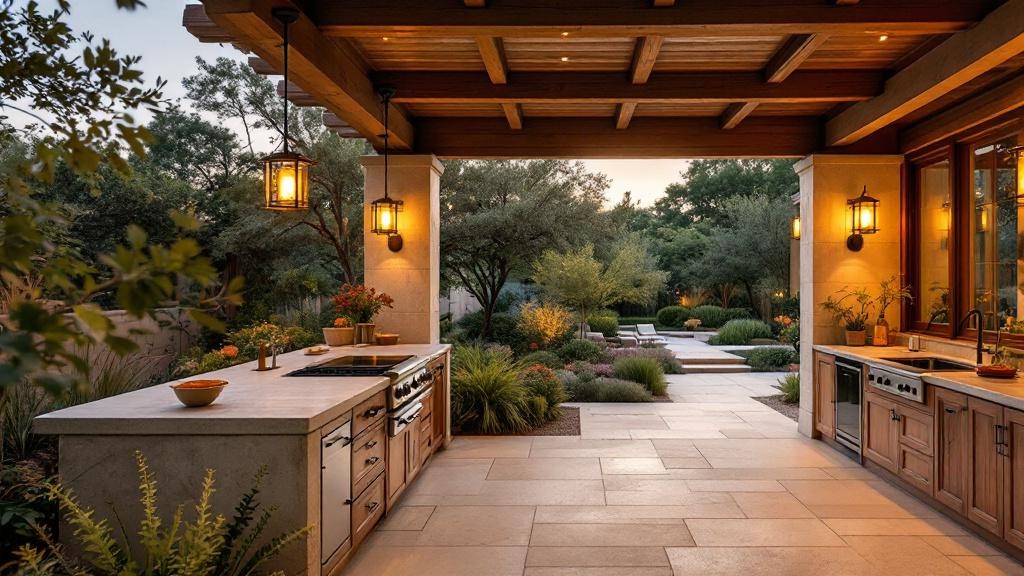
Standing-seam metal roof, full coverage, ceiling fans, integrated lighting. The outdoor-room maximum.
Shade sails
Where the lot calls for soft shapes. UV-rated marine-grade fabric, stainless hardware, proper tensioning.
Vine-covered structures
Pergola form with native vine cover – crossvine, coral honeysuckle. Living shade by year three.
Integrated lighting
Pergola wired for warm pendants or hidden up-lighting. Designed in, not bolted on.
Engineered. Naturalistic. Built to age.
Shade engineered for Texas
Sun studies, slat-spacing calculations, structural sizing. The pergola actually shades the patio at the time of day you use it – not just at noon.
Defines a room, not decoration
A pergola or pavilion turns a patio into an outdoor room. The structure becomes the ceiling of the space – the design starts there.
Materials that age beautifully
Cedar that silvers gracefully. Steel that develops a patina. No vinyl, no painted metal, no plastic. The structure looks better in year ten than day one.
What working with us looks like.
Site visit
We walk the property, talk through use, check drainage and sun, and leave with a fixed-fee design proposal – usually within a week.
Master plan
2D plan view, material palette, native plant list, phased budget. You see it before we touch a shovel. Design fee credits 100% toward the build.
Build
Our crew, not subs. We handle hardscape, planting, irrigation, lighting end-to-end. Most projects finish in 4–10 weeks.
Year-one care
Walk-throughs at 30 days, 6 months, and 12 months. Anything that doesn’t establish, we replace. 5-year warranty on hardscape.
Tell us about your project.
Most projects start with a site visit. Bring photos, Pinterest boards, or just a vague feeling. We’ll take it from there.
Often built alongside this work.
Seven things we build in Austin.
Design-build under one roof. Limestone, native plants, real engineering on every project – from a $25k native garden to a full-yard build.