Water moves before the design starts.
French drains, swales, dry creek beds, catch basins, foundation drainage. The boring stuff that protects your ,000 patio from your ,000 storm. Engineered first, designed around.

River rock and stabilized DG.
Polished river rock embedded in stabilized decomposed granite makes a drainage swale look like a creek bed – not an industrial trench. The naturalistic surface is the design feature.
Most yard drainage is invisible – until it isn’t.
A 5-inch rain event hits, and suddenly water is against the foundation, beds are washed out, the patio is underwater. Drainage isn’t an upgrade. It’s the bones of the project.
Water against the foundation
Wrong slope, wrong gutters, wrong grade – and suddenly the foundation is taking water every storm. Foundation repair starts at . Drainage costs less than 10% of that.
Runoff erodes beds
No swales, no drains, no plan. Every heavy rain washes mulch and topsoil down the slope. Plants drown or wash out. The garden looks bad year-round.
Pop-up emitters that clog
The fix-it-quick drainage answer. They clog with leaves, debris, mulch. By year two they’re useless. We don’t install them – we engineer proper outfalls instead.
Six elements of real yard drainage.
Most of what we do here you’ll never see. Done right, you also never notice it failing.

French drains
Perforated pipe in stone trenches, wrapped in geotextile. Properly graded, sized for the drainage area, with real outfalls.
Swales
Shallow grass or planted channels that move water naturalistically across the yard. Often the prettiest drainage solution.
Dry creek beds
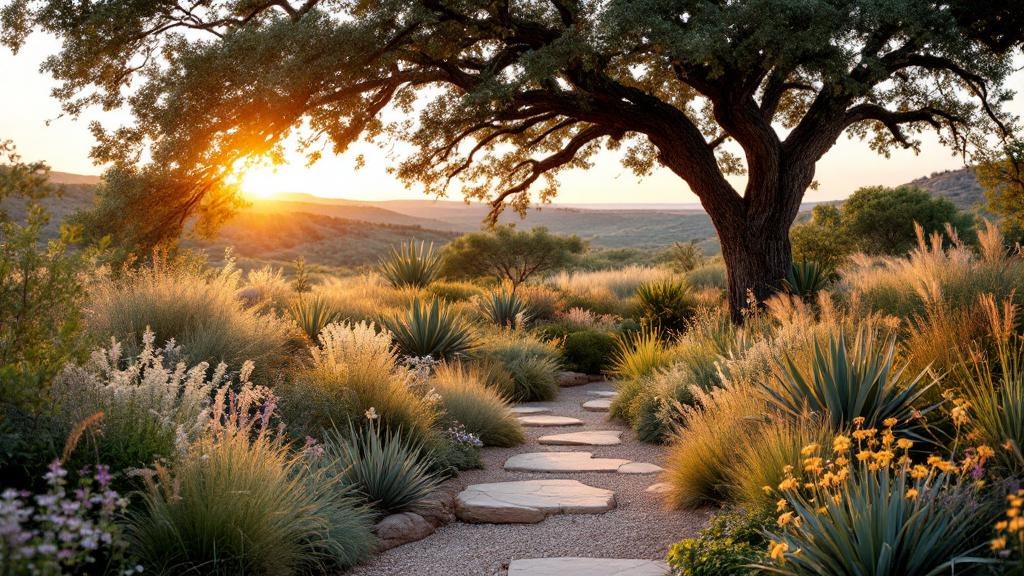
River-rock channels with native plant edges. Functional drainage that reads as landscape.
Catch basins + area drains
Where surface water collects, we collect it. Properly sized grates, proper trenched pipe, proper outfalls.
Foundation drainage
Proper grade away from the house. Foundation drains where lots are tight or rainwater is heavy.
Sub-grade drainage
Under-patio drainage so the hardscape stays put. Stone base + drain pipe + outfall. The bones of long-lasting hardscape.
Hidden. Engineered. Naturalistic where possible.
Water moves first
Before we plant anything, before we set any stone, we map where water comes from and where it needs to go. Drainage is the bones of the design.
Engineered, not estimated
Drainage area calculations. Pipe-sizing tables. Slope minimums. Soil percolation rates. We size for 100-year storm events, not last year’s rain.
Naturalistic where possible
Swales and dry creek beds beat hidden pipe where the lot allows it. The drainage becomes a design feature instead of just function.
What working with us looks like.
Site visit
We walk the property, talk through use, check drainage and sun, and leave with a fixed-fee design proposal – usually within a week.
Master plan
2D plan view, material palette, native plant list, phased budget. You see it before we touch a shovel. Design fee credits 100% toward the build.
Build
Our crew, not subs. We handle hardscape, planting, irrigation, lighting end-to-end. Most projects finish in 4–10 weeks.
Year-one care
Walk-throughs at 30 days, 6 months, and 12 months. Anything that doesn’t establish, we replace. 5-year warranty on hardscape.
Tell us about your project.
Most projects start with a site visit. Bring photos, Pinterest boards, or just a vague feeling. We’ll take it from there.
Often built alongside this work.
Seven things we build in Austin.
Design-build under one roof. Limestone, native plants, real engineering on every project – from a $25k native garden to a full-yard build.