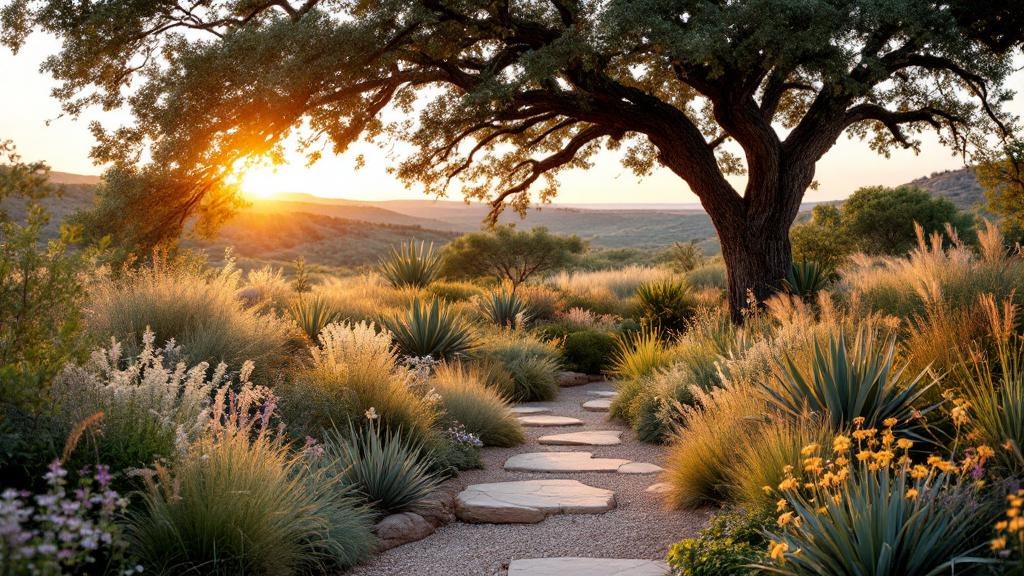
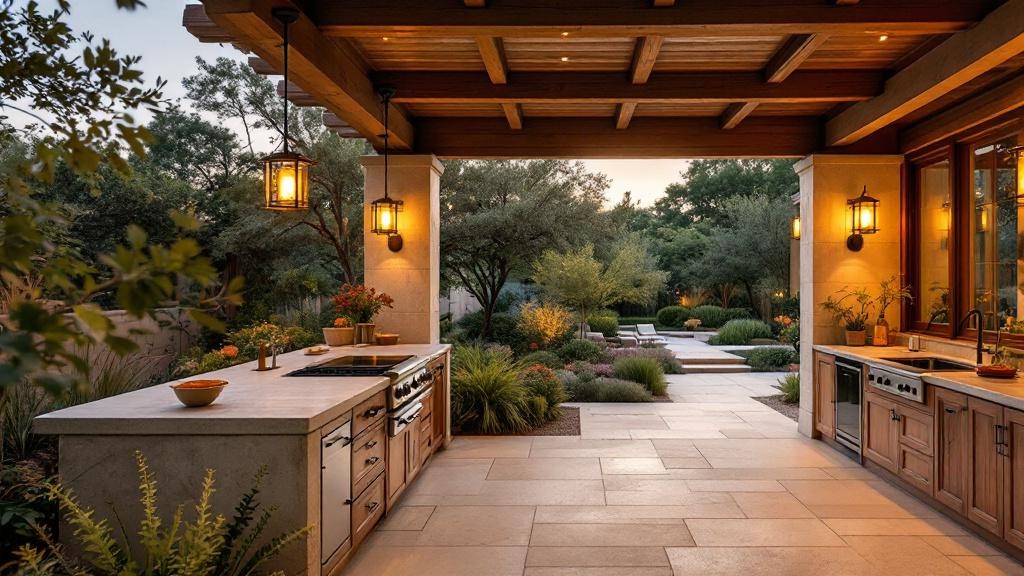
Hardscape that holds its shape in year ten.
Limestone patios, dry-stack walls, decomposed-granite courtyards, fire pits, and outdoor fireplaces – built on a proper base, with proper drainage and edge restraint. The boring parts, done right, are why a Greenline patio still looks new in year ten.
Most Austin patios start cracking by year three.
Austin soils swell and shrink with the rains. Cheap installs ignore that. Done right, a hardscape lasts decades. Done wrong, it’s a $30k project that needs replacing before the kids are out of grade school.
The base is too thin
Industry standard is 4″ of compacted base. Austin clay needs 6″+ in most yards. Skip it, and the stone moves the first time we get a 5″ rain.
Wrong stone for our climate
Travertine cracks. Concrete pavers fade. Imported flagstone delaminates. Hill Country limestone – quarried within 80 miles – handles Texas heat-cycling and looks better with age.
No edge restraint, no plan
If the edges aren’t restrained – steel, concrete, or set stone – the whole patio walks within five years. Most crews skip this. We never do.
Six hardscape elements, done right.
We don’t make everything an option. We build the elements we’ve perfected – and we explain why we don’t build the rest.

Limestone patios
Hand-cut Texas limestone, 6″+ compacted base, mortared or dry-set with polymeric joints. Crisp edge restraint with steel or set stone.
Decomposed-granite courtyards
Stabilized DG with binder for permanence. Cor-Ten steel or limestone edging. Best for shaded courtyards and informal paths.
Dry-stack limestone walls
No mortar, all gravity and craftsmanship. Develops a moss patina over the first three years. Drainage stone behind every wall.
Fire pits
Limestone surround, dimensional or organic shape, gas or wood. Smoke-control fire ring inside, proper drainage below.
Outdoor fireplaces
Cut-stone or veneered, integrated chimney with proper draft, kindling and wood-storage cavities. Anchors the outdoor room.
Water features
Recirculating runnels, fountains, and naturalistic ponds. Pump-room engineering and overflow planning that doesn’t break in a freeze.
Native materials. Room-defining. Built to last.
Native stone, sourced close
Limestone from Hill Country quarries within 80 miles. Decomposed granite from local pits. Cedar from Texas mills. The materials look like they belong because they do.
Designed to define a room
Every patio, wall, and fire feature serves an outdoor room. Sitting area. Dining zone. Cook-and-host space. Hardscape is the architecture; planting is the wallpaper.
Engineered for the boring parts
Compacted base. Geotextile under loose stone. Drainage stone behind every wall. Steel edge restraint. Expansion joints. None of it shows. All of it matters.
What working with us looks like.
Site visit
We walk the property, talk through use, check drainage and sun exposure, and leave with a fixed-fee design proposal – usually within a week.
Master plan
2D plan view with stone selections, dimensions, drainage strategy, planting palette, and phased budget. You see it before we touch a shovel.
Build
Our crew, not subs. Excavation, base, drainage, stone setting, mortar work, edge restraint – done in order, photographed at each step.
Year-one care
30-day, 6-month, and 12-month walk-throughs. Any settling, efflorescence, or planting failures we address. 5-year warranty on hardscape.
Tell us about your hardscape project.
Most hardscape projects start with a site visit. Bring photos or a Pinterest board if you have one – we’ll bring our soil probe.
Most hardscape projects include these.
Seven things we build in Austin.
Design-build under one roof. Limestone, native plants, real engineering on every project – from a $25k native garden to a full-yard build.