Outdoor kitchens built into the patio, not bolted on top.
Hand-cut stone counters, integrated grills, weatherproof cabinetry, real cooking flow. Designed alongside the hardscape – not delivered as a kit from a catalog.

Weathered Texas cedar.
Texas eastern red cedar from regional mills. Silvers gracefully over three years. We use it for pergola posts, fence slats, and bench seats – never for surfaces that touch food.
Most outdoor kitchens disappoint by year two.
The prefab kits look fine in the showroom and rust in the rain. The cooking flow is wrong. Storage is undersized. The kitchen becomes a beautiful, expensive prop.
Prefab modules in Texas weather
Stainless-clad MDF boxes warp by year three. The hinges fail. The doors stop closing. You spent on a repair every five years.
Cooking flow ignored
Catalog kitchens put the grill, prep, and storage in a line – terrible for actually cooking. A real outdoor kitchen needs a triangle, just like an indoor one.
No shade integration
The kitchen faces west with no pergola or pavilion overhead. In August at 6 PM, no one’s cooking out there. The kitchen sits unused 4 months a year.
Six elements of a working outdoor kitchen.
Built in, not bolted on. Each element designed alongside the hardscape and shade structure.
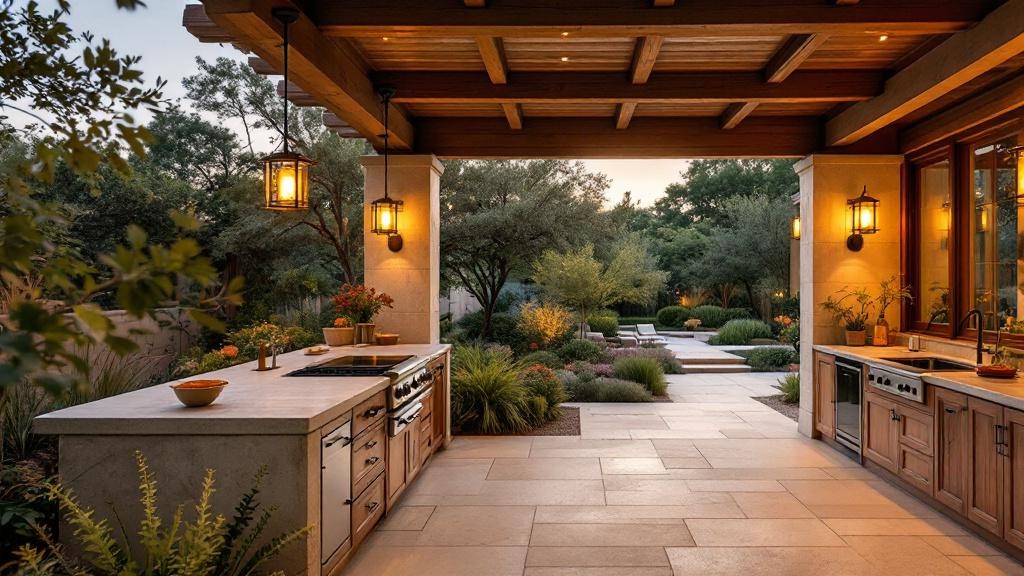
Stone counters
Hand-cut limestone, granite, or thermal-finish stone. Sealed for weather. Mortared into the hardscape.
Built-in grills
DCS, Lynx, or Wolf – gas, charcoal, or hybrid. Integrated into the counter run with proper venting.
Beverage stations
Sink, refrigerator drawers, ice maker, kegerator. Plumbed and powered properly.
Pizza ovens
Wood-fired or gas. Forno Bravo, Mugnaini, or custom builds. Anchors the kitchen as a destination.
Weatherproof storage
Soss-hinge stainless drawers from BBQ-grade manufacturers. Designed for Texas humidity and freezes.
Power, gas, water, drainage
The boring stuff: properly trenched gas, GFCI outlets, water supply, freeze-resistant drainage. Done right the first time.
Stone-first. Flow-first. Texas-tested.
Stone-first construction
The kitchen begins as part of the patio. Limestone or granite counters mortared in. No prefab boxes. The result lasts 30 years instead of 7.
Designed for hosting flow
We map the cooking triangle, the prep zone, the dining flow, the sight lines back to the house. The kitchen serves the way you actually host – not the way the catalog photographs.
Built for Texas weather
Pergola or pavilion sized to shade at 4-6 PM in August. Drainage planned for downpours. Freeze-resistant plumbing. Year-round usable.
What working with us looks like.
Site visit
We walk the property, talk through use, check drainage and sun, and leave with a fixed-fee design proposal – usually within a week.
Master plan
2D plan view, material palette, native plant list, phased budget. You see it before we touch a shovel. Design fee credits 100% toward the build.
Build
Our crew, not subs. We handle hardscape, planting, irrigation, lighting end-to-end. Most projects finish in 4–10 weeks.
Year-one care
Walk-throughs at 30 days, 6 months, and 12 months. Anything that doesn’t establish, we replace. 5-year warranty on hardscape.
Tell us about your project.
Most projects start with a site visit. Bring photos, Pinterest boards, or just a vague feeling. We’ll take it from there.
Often built alongside this work.
Seven things we build in Austin.
Design-build under one roof. Limestone, native plants, real engineering on every project – from a $25k native garden to a full-yard build.