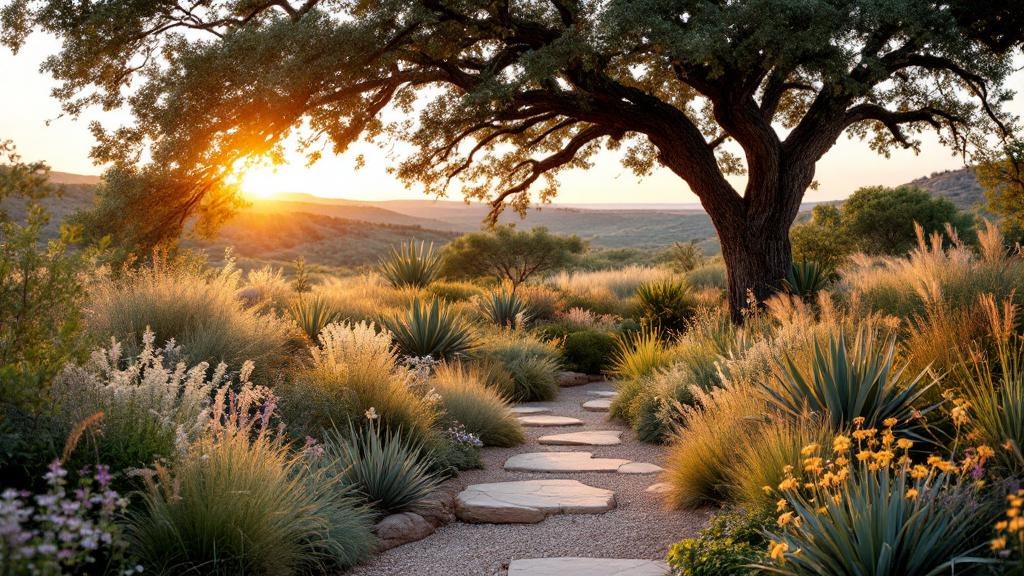
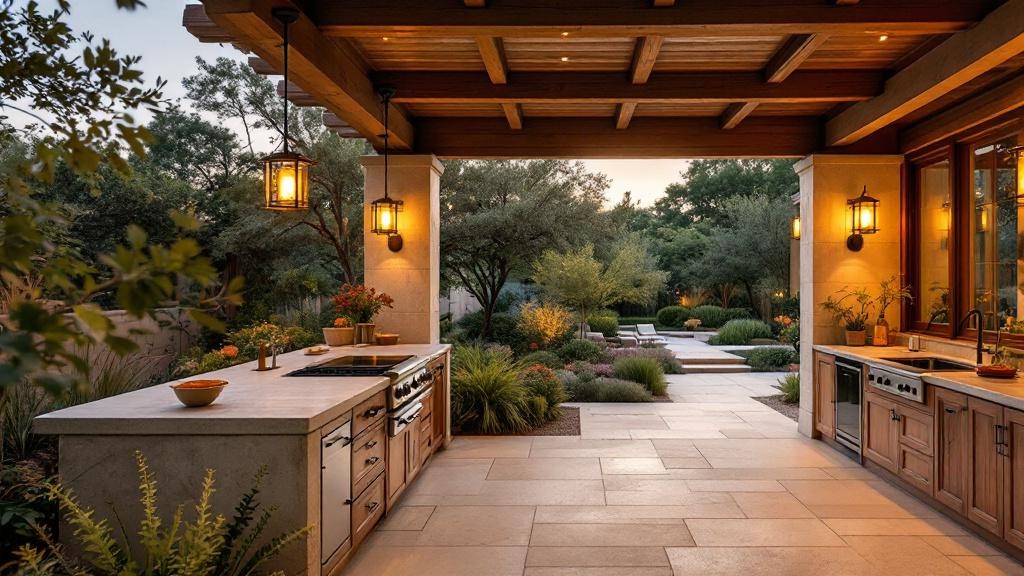
A field guide to Austin landscapes.
Native plants that actually work here. Watering schedules tied to our actual rainfall. Drought-tolerant lawn alternatives. Planting calendars. Things we tell every client, written down.

Twelve native Austin plants that always work.
These are the plants we lean on across nearly every Greenline design. All native or naturalized to Central Texas. All drought-tolerant once established. All look better in year five than year one.
1. Mexican feather grass (Nassella tenuissima) – the signature texture of our gardens
2. Texas sage (Leucophyllum frutescens) – silver leaves, lavender bloom, deer-resistant
3. Blackfoot daisy (Melampodium leucanthum) – white blooms from March to November
4. Agave americana (century plant) – sculptural anchor of any xeriscape
5. Live oak (Quercus virginiana) – the king of Hill Country canopy
6. Cedar elm (Ulmus crassifolia) – fast-growing native shade
7. Possumhaw holly (Ilex decidua) – red berries in winter, the architectural understory
8. Inland sea oats (Chasmanthium latifolium) – beautiful native grass for shade
9. Cedar sage (Salvia roemeriana) – red flowers in spring, thrives in deep shade
10. Four-nerve daisy (Tetraneuris scaposa) – yellow daisies almost year-round
11. Mexican plum (Prunus mexicana) – early spring blooms, native fruit
12. Gulf muhly (Muhlenbergia capillaris) – pink cloud of bloom each fall
Watering a native garden.
Year 1 (establishment): Deep weekly watering – about 1″ of water on the root zone, ideally before sunup or after sundown. Skip watering after rain events of 0.5″ or more.
Year 2: Reduce to every other week. Most native plants have rooted enough to handle summer with occasional help.
Year 3 and beyond: Native gardens handle Texas drought with 3–6 deep waterings across the entire summer. That’s it. If a plant needs more than that to survive, it doesn’t belong in an Austin garden.
The August check: in years 3+, walk the garden in mid-August. If plants look stressed (curled leaves, gray cast), give a single deep watering. Otherwise leave it alone – stress builds resilience.
Lawn alternatives that work in Austin.
Buffalo grass (Bouteloua dactyloides) – true Texas native, blue-gray color, mow once a month. About 60% less water than St. Augustine.
Habiturf – a native turf mix developed by the UT Lady Bird Johnson Wildflower Center. Buffalo grass + curly mesquite + blue grama. The most resilient native lawn we plant.
Sedge meadow – Texas sedge (Carex texensis), Berkeley sedge (Carex divulsa). No mowing. Works in shade. Looks like a meadow.
Decomposed granite – not a lawn at all. Permeable, low maintenance, materials-appropriate. The right answer for many small lots.
What we never plant: St. Augustine, fescue, Bermuda. They drink the budget, brown in August, depend on chemicals, and look wrong in Texas anyway.
When to plant in Austin.
October–November: the best month to plant almost anything. Soil is still warm, air is cool, winter rains help establishment. We schedule most of our plantings for fall.
February–March: the second-best window. Plant before the heat hits in May. Most natives push significant growth between March and June.
June–September: avoid planting if at all possible. New plants need more water than they can replace from the soil. Many will die.
December–January: dormant season planting works for trees and woody perennials. Don’t plant tender perennials before the last freeze.
Want one of these designed for your yard?
We’d love to talk. Most projects start with a site visit.
The same garden, four seasons.
A native Texas garden looks different month to month, but every month should look intentional. Here is the same composition across the four seasons.


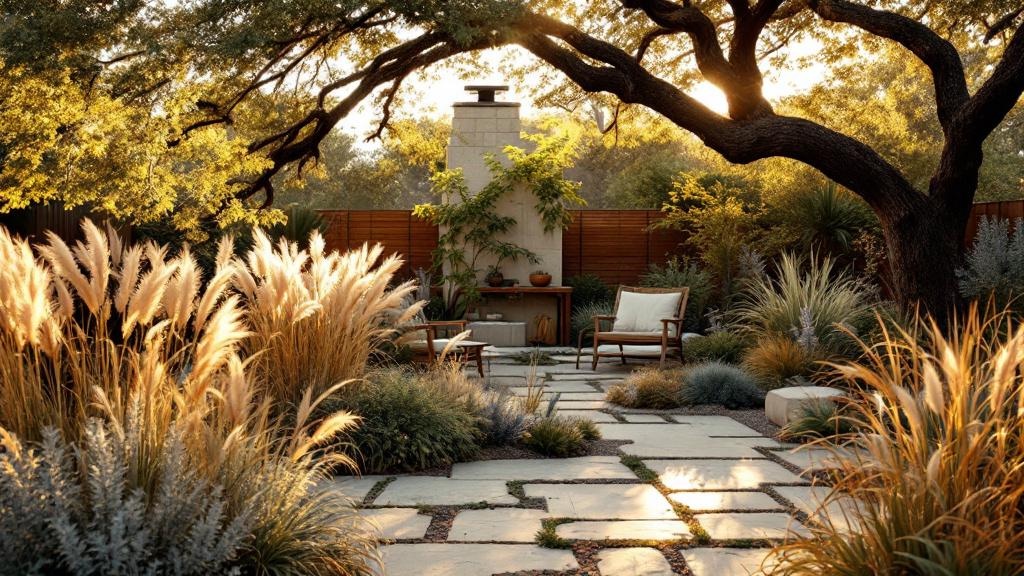
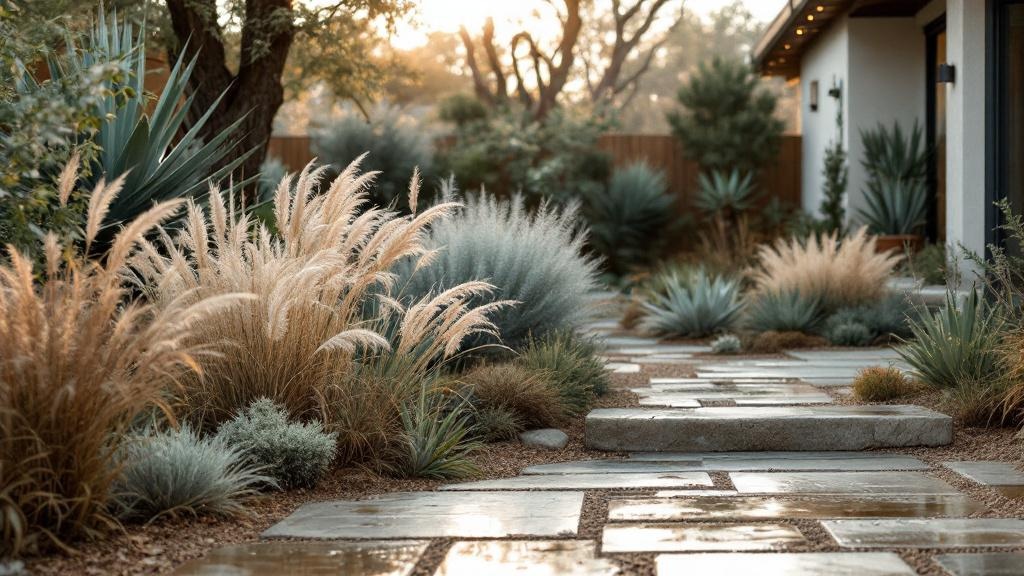

A working palette of native Texas plants. Most live across our designs from Tarrytown to Dripping Springs.
Seven things we build in Austin.
Design-build under one roof. Limestone, native plants, real engineering on every project – from a $25k native garden to a full-yard build.